

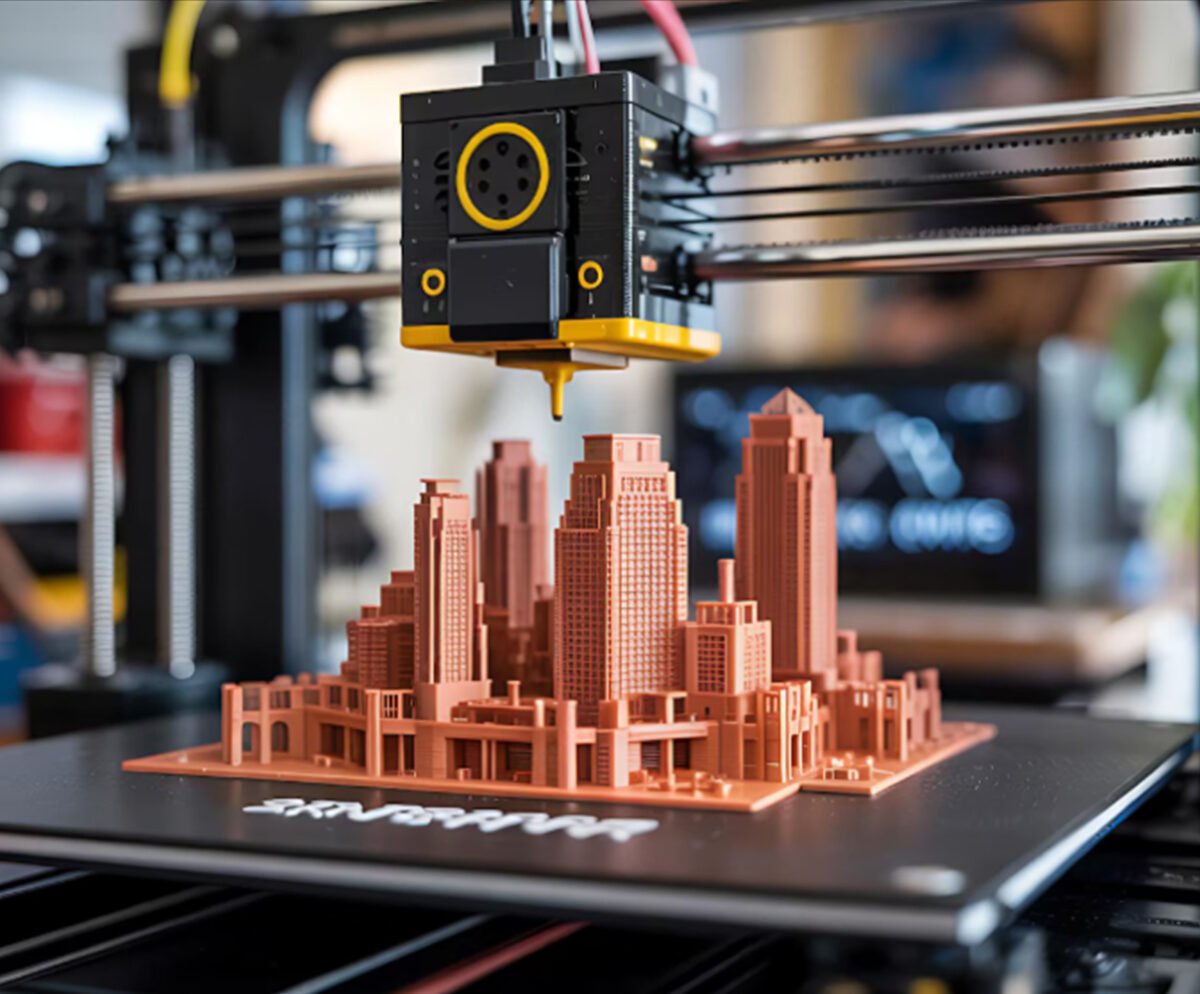
Introduction: When Architecture Meets Advanced Manufacturing
Architecture has always evolved alongside technology.
From hand-drafted blueprints to CAD and BIM, each shift has transformed how buildings are imagined and delivered. Today, another powerful innovation is redefining the design and ATA architectural and design expertiseconstruction process – 3D Printing in Architecture.
What was once experimental is now becoming practical, scalable, and commercially viable.
At ATA International Consulting Design Services (ATA ICDS), we integrate forward-thinking technologies into our architectural design services, helping clients explore how 3D printing can unlock design freedom, efficiency, and sustainability in modern architecture.
What Is 3D Printing in Architecture?
3D Printing in Architecture also known as additive manufacturing uses digital design data to create physical components layer by layer.
In architectural design, this technology is used for:
- Concept and presentation models
- Complex façade elements
- Structural components
- Interior design features
- Full-scale building construction in select cases
Unlike traditional construction methods, 3D printing allows architects to translate digital designs directly into physical form with minimal material waste.
The Traditional Design Challenge: Complexity vs. Feasibility
Architects often push creative boundaries, but traditional construction methods impose limits.
Common constraints include:
- High costs for complex geometries
- Time-intensive prototyping
- Material waste
- Design compromises due to constructability concerns
3D printing removes many of these barriers, allowing architectural intent to drive execution, not the other way around.
How 3D Printing Is Transforming Modern Architectural Design
1. Unprecedented Design Freedom
3D printing enables:
- Complex geometries that are difficult or impossible to build conventionally
- Organic, parametric, and free-form designs
- Custom architectural elements without excessive cost
Architects can design with fewer constraints, resulting in more expressive and innovative spaces.
2. Faster Prototyping and Design Validation
Instead of relying solely on digital renders, architects can:
- Produce physical models quickly
- Test scale, proportions, and spatial relationships
- Present tangible concepts to clients and stakeholders
This accelerates design approvals and improves communication.
3. Improved Construction Efficiency
In construction applications, 3D printing allows for:
- Faster fabrication of components
- Reduced labor dependency
- Greater precision and consistency
This shortens project timelines and reduces on-site errors.
4. Sustainable and Resource-Efficient Design
Sustainability is a growing priority in architectural design.
3D printing supports this by:
- Minimizing material waste
- Optimizing material usage through precise deposition
- Enabling the use of eco-friendly materials
This aligns well with sustainable architecture goals.
5. Cost Optimization for Complex Designs
Traditionally, complexity increases cost.
With 3D Printing in Architecture:
- Complexity is built into the process
- Customization doesn’t significantly raise costs
- Design innovation becomes more commercially viable
This shifts the cost equation in favor of creativity.
How ATA ICDS Integrates 3D Printing into Architectural Design
At ATA International Consulting Design Services, technology supports design, not replaces it.
Our architectural design approach leverages 3D printing as a strategic tool across different project stages.
Concept Development and Design Exploration
We use 3D printing to:
- Translate conceptual designs into physical models
- Explore form, scale, and spatial relationships
- Refine architectural intent early in the process
Client Presentations and Stakeholder Communication
Physical 3D-printed models help:
- Improve client understanding
- Speed up design approvals
- Reduce misinterpretation of design intent
Complex Component Design Support
For projects involving intricate details, we assist with:
- Designing 3D-print-ready architectural elements
- Coordination with fabrication and construction teams
- Ensuring constructability without compromising design
Technology-Driven Architectural Innovation
ATA ICDS continuously explores:
- New materials and printing techniques
- Integration with BIM and digital workflows
- Scalable applications for real-world projects
Real-World Impact: From Concept to Constructible Design
On a mixed-use development project, ATA ICDS introduced 3D printing during the design phase.
This enabled:
- Rapid prototyping of façade elements
- Early detection of design inefficiencies
- Better coordination with construction teams
The result was a refined design that maintained architectural ambition while remaining practical and cost-effective.
What You Gain with ATA ICDS Architectural Design Services
- Expertise in 3D Printing in Architecture
- Forward-thinking architectural design solutions
- Faster design validation and approvals
- Sustainable and efficient design approaches
- Seamless integration of technology and creativity
We design buildings that are not just visually compelling but technically intelligent.
Conclusion: The Future of Architecture Is Being Printed
3D Printing in Architecture is no longer a future concept, it’s an active force reshaping how architects design and deliver buildings.
When combined with thoughtful architectural expertise, this technology empowers designers to break limitations, improve efficiency, and build sustainably.
With ATA International Consulting Design Services, innovation is not an add-on, it’s embedded in the design process.
Because the future of architecture is not just designed, it’s engineered with intelligence.