

Introduction: Transforming Construction Through Digital Intelligence
The construction industry is no stranger to evolution.
From manual draft boards to CAD, from fragmented workflows to integrated design platforms, the way buildings are designed and delivered has shifted significantly over the years.
Today, Building Information Modeling Service (commonly known as BIM) is driving the next big leap. It’s no longer “just another software”, it’s a strategic backbone for construction companies striving to enhance coordination, reduce risk, and improve overall delivery.
For modern construction firms, BIM is rapidly becoming an operational necessity, not an optional add-on.
At ATA International Consulting Design Services (ATA ICDS), our BIM Design Support services help construction teams transition confidently into BIM-enabled project planning and execution.
What Is a Building Information Modeling Service?
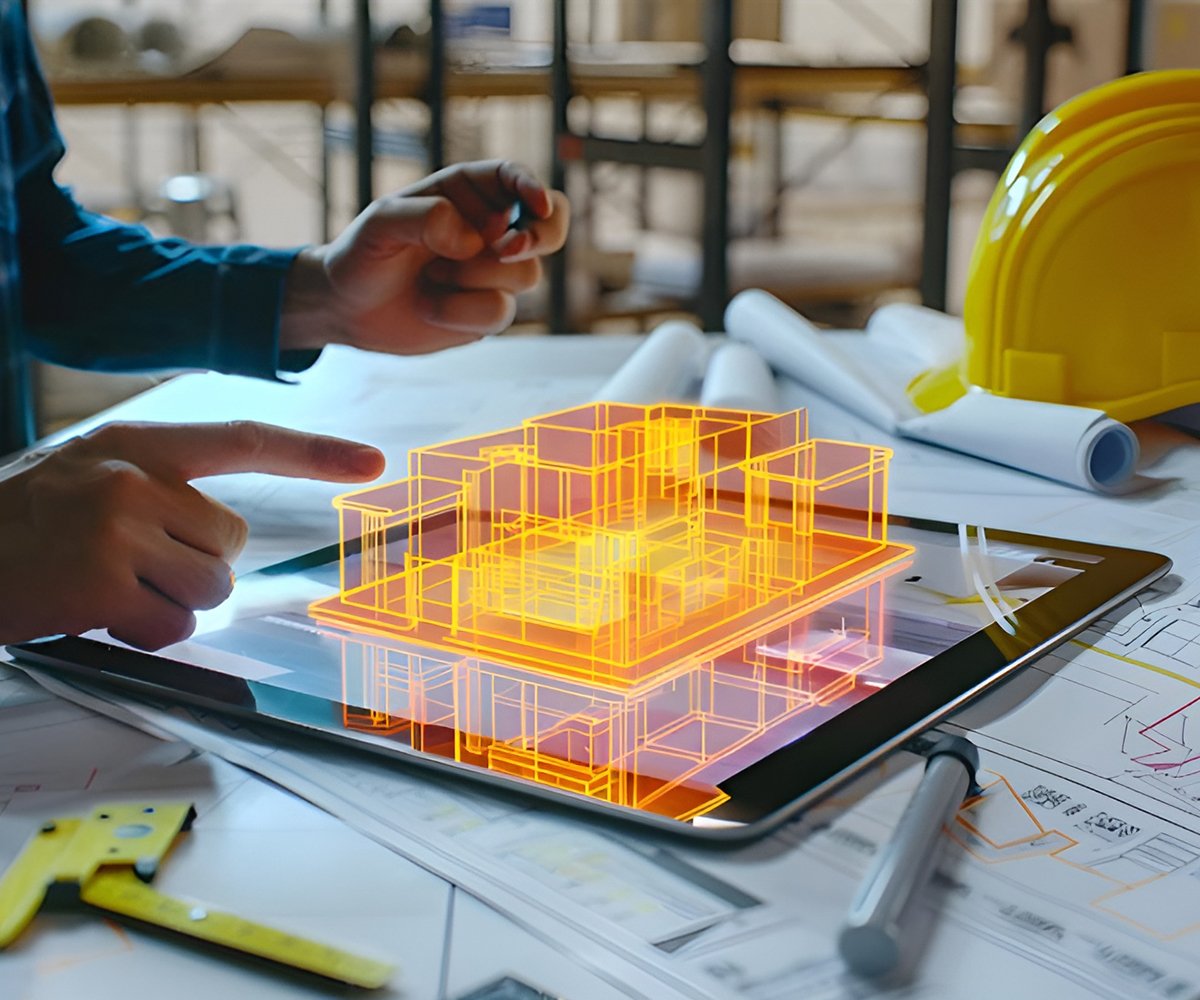
A Building Information Modeling Service is a comprehensive approach that goes beyond traditional 2D drawings. At its core, BIM involves creating intelligent, data-rich 3D models that represent every element of a building—from geometry and materials to performance data and system relationships.
To gain a deeper understanding of how BIM works and why construction companies are increasingly adopting it, explore our detailed guide on BIM services explained, where we break down the fundamentals and real-world impact of BIM adoption.
Unlike conventional drafting:
- BIM models are dynamic, accurate, and interactive
- Changes automatically update throughout the model
- Information is shared across teams and disciplines
- Models support design, analysis, construction, and facility management
For construction companies, BIM becomes a central source of truth—bridging gaps between design intent and construction execution.
The Construction Industry Challenge: Complexity, Cost and Coordination
The modern construction environment is complex:
- Multiple stakeholders with different deliverables
- Tight schedules and budget pressures
- Frequent design revisions
- Coordination between architecture, structure, and MEP systems
- Errors discovered only during construction
These issues translate into rework, delays, overruns, and erosion of profit margins.
Traditional 2D workflows simply aren’t equipped to handle this level of complexity with accuracy and efficiency.
This is where Building Information Modeling Service begins to make a measurable difference.
Why Building Information Modeling Service Are Becoming Essential for Construction Companies
1. Integrated Coordination Across Disciplines
BIM integrates all major disciplines—architectural, structural, mechanical, electrical, and plumbing—into one coordinated digital model.
This means:
- Conflicts are detected early
- Coordination issues are resolved before construction starts
- Teams work from the same version of truth
Construction companies no longer manage separate drawings and guesswork—they manage clarity and predictability.
2. Clash Detection and Risk Mitigation
In traditional workflows, clashes are often discovered on-site—when they are costly to fix.
With BIM Services:
- Clash detection is automated
- Risks are visualized in the design phase
- Coordination meetings focus on solutions, not problems
This significantly reduces rework, delays, and budget overruns.
3. Accurate Quantity Take-Offs and Cost Estimation
BIM models provide precise, data-driven quantity take-offs far more accurate than manual counting from 2D drawings.
For construction companies, this means:
- Better procurement planning
- More accurate cost forecasting
- Reduced material waste
- Greater budget control
Predictive cost insights reduce surprises during execution.
4. Enhanced Planning with 4D and 5D BIM
BIM isn’t just a 3D model.
When linked with:
- Time schedules → 4D BIM
- Cost data → 5D BIM
Construction teams gain:
- Visual construction sequencing
- Schedule optimization
- Cost visualization linked to time
This enables better planning and keeps projects on time and on budget.
5. Better Communication and Decision-Making
BIM models are visual and intuitive.
Instead of deciphering a stack of drawings, stakeholders can:
- View the project in 3D
- Understand design relationships
- Explore alternatives visually
- Make faster decisions
This reduces ambiguity and accelerates approvals.
How ATA ICDS Helps Construction Companies with BIM Design Support
At ATA International Consulting Design Services, our engineering design experts ensure BIM is more than a process—it becomes a performance-driven advantage for construction teams.
We tailor our BIM Design Support services to align with construction project requirements:
Comprehensive BIM Modeling
We deliver:
- Architectural, structural, and MEP BIM models
- Consistent Level of Development (LOD) aligned to project needs
- Detailed model outputs for construction planning
Our models are not just accurate; they are construction-ready.
Clash Detection and Coordination Support
Using advanced BIM coordination workflows, we:
- Identify clashes early
- Provide resolution strategies
- Facilitate multi-discipline coordination
This allows construction teams to proceed confidently with execution planning.
Construction-Focused Deliverables
ATA ICDS BIM services include:
- Shop drawings and fabrication outputs
- Construction sequencing visuals
- Accurate documentation for site teams
Our support aligns with real-world construction needs, not just design aspirations.
As-Built BIM and Facility Management Support
Our services go beyond construction.
- As-built models capture real site conditions
- Facility management integration improves long-term asset value
- Digital records support operation and maintenance
This ensures your BIM investment continues to deliver value long after project completion.
Real-World Impact: Success Stories from BIM Adoption
On complex construction projects, ATA ICDS BIM Design Support helped:
- Detect major clashes before site mobilization
- Reduce RFIs and construction queries
- Improve construction sequencing and material planning
- Achieve tighter budget control
Our clients experienced not only better outcomes but also improved team collaboration and execution confidence.
What You Gain with ATA ICDS Building Information Modeling Service
- Expert Building Information Modeling Service
- Reduced construction risk and rework
- Clear project coordination and documentation
- Better schedule and cost predictability
- Scalable support across project phases
Our BIM Design Support is engineered to improve your execution, not just enhance visualization.
Conclusion: BIM Is the Backbone of Modern Construction
In today’s competitive construction landscape, BIM is no longer a luxury, it’s essential.
From improved coordination to risk mitigation, cost control to enhanced planning, Building Information Modeling Service helps construction companies deliver projects with confidence and clarity.
With ATA International Consulting Design Services, BIM becomes a practical, powerful tool—transforming complexity into coordinated execution.
Because in modern construction, success isn’t built with drawings. It’s built with intelligence.